
it was never about tanking
the nba wants you to hate tanking. why?

do you care about tanking?
look, i‘m sure you’re just as tired of this discussion as everyone else—i know i am—i assure you this is the first and last time i talk about it at length in one of my articles. nonetheless, the many facets of this discussion have been carving out a hole in my mind for the last few weeks, and i need a place to put them. bear with me for the time being, if you will.
think hard, and be honest with yourself. does a quarter of the league’s teams actively trying to lose basketball games have a major impact on your viewing experience? did you mark february 19th’s washington wizards vs indiana pacers game on your calendar, but scratch it out when it came to be that both teams are tanking now?
aside from the fans of each of those teams, i find it highly likely that most did not plan to spend their evening with tj mcconnell and friends. especially when you consider there were 10 other games on that night, including a battle of the top 2 seeds in the east in pistons vs knicks. the suns vs the spurs, and the rockets vs the currently must-watch hornets were also on that night. the more i think about it, the more it becomes increasingly difficult to believe that the average person is truly, genuinely impacted by the pacers vs wizards, or any other game on that night, being “ruined” by tanking teams, when the average person probably wouldn’t have the time for all 3 of the aforementioned games, let alone even more.
the other, much smaller group of people are those who i lovingly refer to as “the sickos”. true lovers of the game in any form or fashion, they will be watching an ungodly amount of games, and will tune into the most bottom-of-the-barrel teams imaginable. this group, if they wanted to, would actually have the most reasonable claim to be upset about tanking. the thing is, though, you do not become the kind of person who chooses to spend their evening watching a 15-45 team square off with a 16-42 one by virtue of being picky. you come to it by being the kind of person who can get just as much out of one game as the next, without there being a cavernous difference in enjoyment for you if a team is sitting their three best players. where most would say “man, there goes any reason to watch that team”, you simply go “oh, that really mixes things up” and dive into thinking about how it might affect the ins and outs of the game. with neither of these groups being affected by tanking, it calls into question… who actually is? is anybody?
something that’s lost in the phrasing that we use surrounding tanking, such as “teams actively trying to lose games”, is that the teams aren’t actively trying to lose the games. look, i’d be captain of the anti-tanking brigade if there were teams full of players who were running out there, chucking the ball at the backboard as hard as they can or handing their opponent the ball every other possession, (actually that sounds kind of entertaining in its own right) but that’s just not the case. the organizations, of course, and their leadership, are who choose to tank. they put themselves in position by methods such as trading away quality players, giving more minutes to young players over veterans who may well be more productive, expanding the parameters for what is worthy of a player sitting out a game with injury, etc. these methods have a wide range of how acceptable the general public deems them, but i’m of the opinion that as long as the players playing are still actively trying to win, teams are well within their right to do as they please in this regard.
funnily, i find the person who tends to be most vocally anti-tanking is the “old-head” nba fan. platitudes about how back in their day, everyone was fighting tooth and nail, and there was never any tanking, fall a little flat when you remember that the first notable instance of tanking in the nba was in the 1983-84 season. so, unless this person is about 70 years old or older, i’d call them out on their shit the next time they try to use this line of reasoning with you.
the hakeem olajuwon draft, as it was seen at the time (though of course there ended up being another guy just as worthy of tanking for in that class too… shoutout to sam bowie!), had the houston rockets willing to do whatever it took to try to get that #1 pick. at the time, it was simple: no draft lottery meant the system was easy to game. the teams that finished last in their respective conferences would flip a coin, with the winner being awarded the #1 pick and the loser #2. and so, all the rockets had to do was lose as many games as possible, and they would have a 50% shot at hakeem olajuwon.
the nba immediately cracked down on this and introduced the lottery system, different from the one we have today, but with the same purpose in mind: to give less incentive to losing on purpose.
but how much worse has the product become, really? in the 10 years prior to the introduction of the lottery system, the bottom quarter of the league had an average win percentage of .339. (28 wins per 82 games). the 10 years after, the bottom quarter of the league’s average sat at .290 (24 wins).
of course, you could read these numbers and come to the conclusion that, even though the nba was trying to patch up a sinking boat, the tactics the rockets used in ‘84 let in far too much water to ever recover from, and surely when you fast-forward to the present day, it must have progressively gotten much, much worse. i was curious about this myself, so i took a look at the last 10 years as well, and discovered that the bottom quarter of the league sits at a .308 win percentage (25 wins) in that span.
you would technically be right to say that, since the advent of tanking was popularized, the bottom fourth of the league has gotten undeniably worse. but really, it’s marginal—is this chunk of teams winning an average of 3-4 fewer games per season really worth all this fuss? i couldn’t imagine it is.
but then again, it was never about that.
the purpose of this piece, despite my verbosity pointing it in this direction, is not just to convince anti-tank viewers that it actually doesn’t affect the product that much. the real reason i’ve gone through this trouble is with the hopes of getting you asking the question:
by who am i being told tanking matters, and why?
as has been the case for many years now, the biggest peddlers of anti-tanking ideology is the league itself. especially more recently, as the lottery system remained untouched for 23 years since 1990’s changes, but since 2013 it has already been tinkered with twice, with a third set of changes seemingly urgently inevitable. after much uproar from the league, as well as bored nba viewers (trust me, it is no coincidence this discourse all happened in what is widely known as the dog days of the nba season), it was reported by shams charania that there were multiple meetings held among those in power in the league proposing new rules that could be added to curb tanking.
these ranged from seemingly reasonable enough to absolutely ludicrous, with ideas such as limiting protections on traded picks, freezing lottery odds at the trade deadline, and teams being unable to pick top-4 the year after making the conference finals (a.k.a. the fuck you pacers rule) being a part of the many proposed changes.
while there is certainly a lot to dig into with these proposed rule changes, none of that was the part of the report that really stuck out. what caught my eye was this line:
stakeholders have intensified dialogue about combating tanking
it does not take a genius to connect the dots here. in a league that has domestic abusers, cap circumvention scandals, players and owners directly investing in genocide, players partnering with gambling companies (all of which the league gives little care to, if any at all), they have decided to put all of their energy, instead, into tanking. it’s easy to see why: none of the aforementioned things actually affect the league’s bottom line—gambling companies pulling out of advertising deals does. it’s always, and only, about the money. it did not take long for it to be reported on, either, by ben golliver:
“over-unders are at stake. you know, player props are at stake. if coaches are just willy-nilly not playing guys the entire game, and they’re not letting people know in advance that they plan to do that, you’re going to have a lot of angry gamblers and a lot of angry gambling companies as well.”
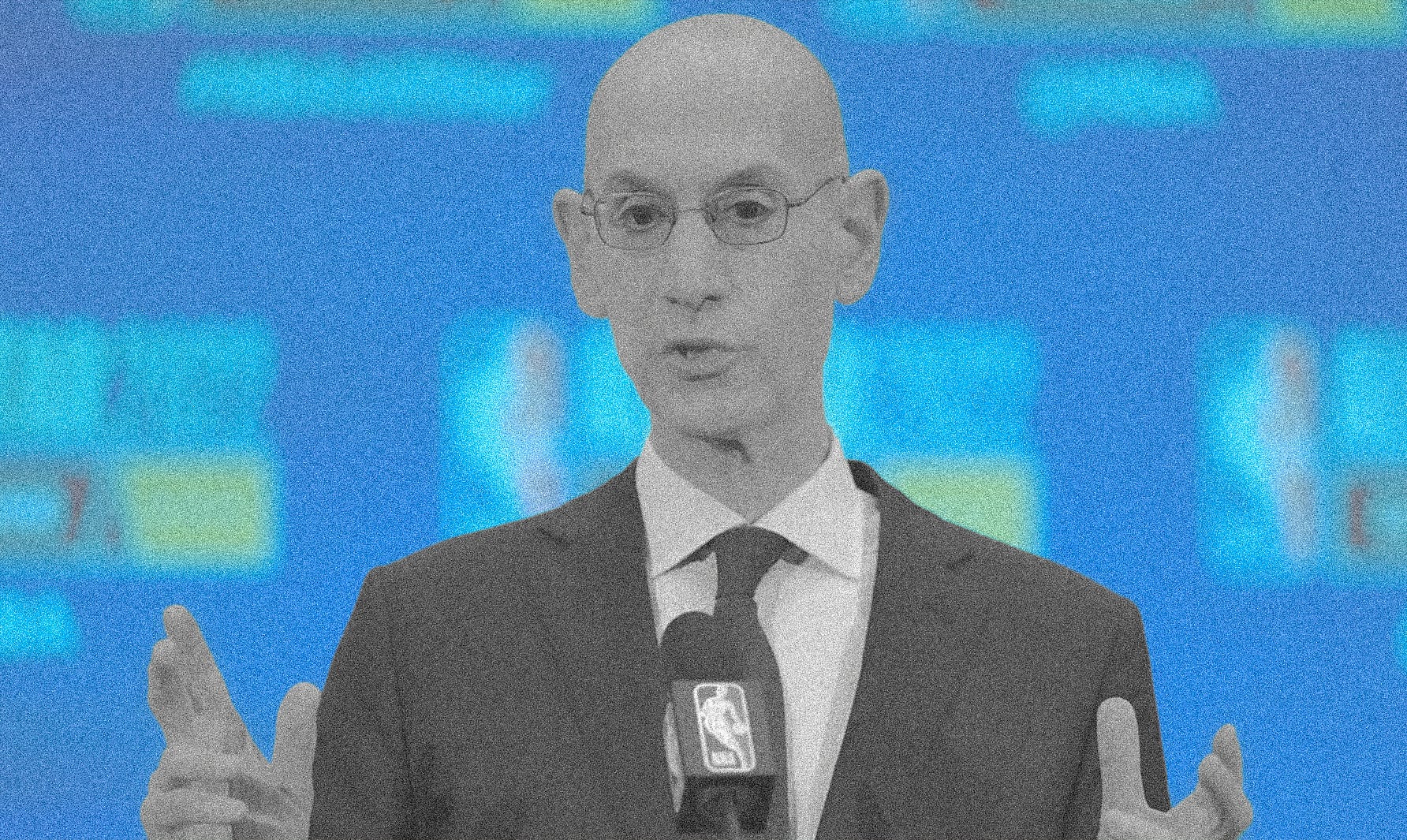
so i beg of you not to take adam silver or other league execs at face value when they claim the laser-focus on tanking is to “protect the sanctity of the league”. it is only ever to protect the sanctity of their pockets.
on top of this, the league’s attempts to curb tanking have often only made things worse. the flattened lottery odds have been an absolute disaster at promoting parity, with teams often being stuck in limbo due to teams with better records rising in the draft order. take the detroit pistons, for example, who had been stuck in rebuild mode since 2019, in large part due to getting screwed by flattened lottery odds:
2020: 4th odds, 7th pick
2021: 2nd odds, 1st pick
2022: 3rd odds, 5th pick
2023: 1st odds, 5th pick
2024: 1st odds, 5th pick
bottom 4 in record 5 years in a row, and only one top-4 pick to show for it. the pistons have been able to claw their way out of it, but the flattened draft lottery odds wildly extended their rebuild phase. this isn’t as big of a deal for a team like the pistons, though, as it is for teams like the utah jazz.
this hurts nobody more than small markets like utah, because… well, no stars want to move to utah. it’s a small market, there’s not a lot of exciting things going on in the city, and the weather isn’t particularly attractive. small market teams like the jazz completely lose the ability to build through free agency when they have to compete with teams and cities like the lakers, warriors, knicks, etc.
there are three main ways of obtaining talent in the nba: trades, free agency, and the draft. small market teams can effectively pretend free agency doesn’t exist, so when lottery odds are flattened, these already disadvantaged teams are even further hampered.
it doesn’t create the parity that the nba so often pretends to desire. but truly, the nba has never desired parity. the nba has never given a single fuck about small market teams. that’s why there’s absolutely no care to if they are hurt when implementing rules like this. that’s why when dallas jumped up from 11 to 1 last year, and the spurs jumped up from 8 to 2, it was radio silence from the league, but when the jazz pulled their guys in the 4th, and the pacers had the gall to exist, massive fines came down. at best, the league is indifferent to the very obvious examples, time and time again, of the flattened odds hurting small market teams. at worst, they are completely enraged by their sheer existence and the nerve of them not to generate as much money as their beloved lakers, celtics, or knicks. the nba does not want league-wide parity—they want parity among the biggest markets, while the rest of the teams rot away forever. i have little doubt that if they could do so without scrutiny, they would just order the draft lottery from the biggest market to the smallest every year.
this is why tanking isn’t just “not a big deal”, but it is necessary. for anything even remotely close to parity to be created, teams with nowhere to go putting practices in place to increase their chances of losing will always be needed. yes, there are other sports that do not need tanking—there are also other sports leagues that do not have a draft at all! that is to say, every league is very different. the nba, as currently constructed, needs tanking. please do not let a handful of money-hungry, morally bankrupt executives convince you otherwise.
I do think rules need some tweaking because tanking is still mediocre for the product, but full agree that the NBA wanting to stop it isn't coming from a genuine place.
Their willingness to associate with gambling companies and such truly disgusts me, it truly strips the league of integrity.
You are right that under the current system, tanking is necessary for teams to improve. It doesn't have to be this way, though. We can get rid of tanking while still getting the bad teams the help that they need.